
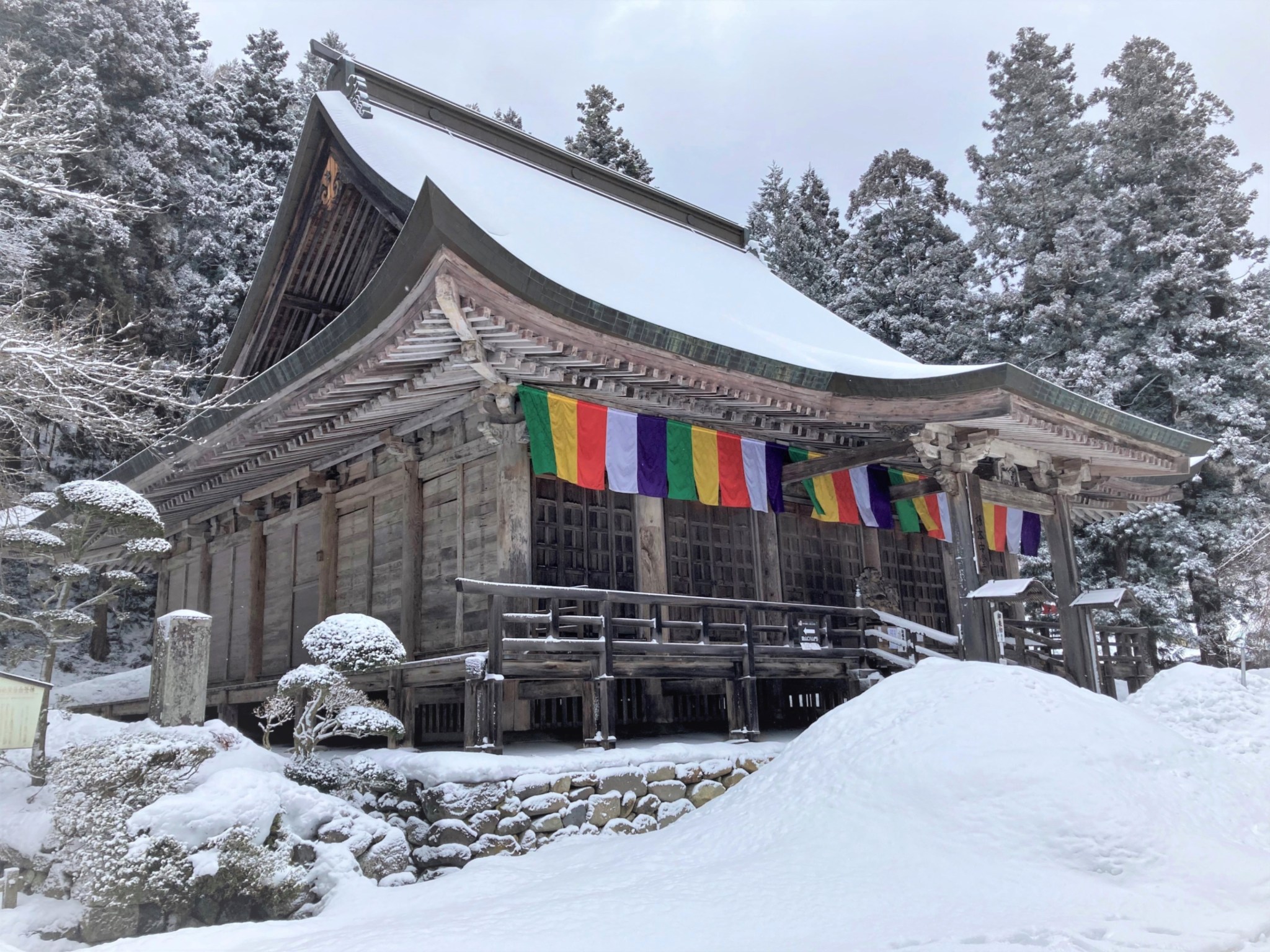
At this time of year, Japan offers some unique travel experiences in stunning snow-covered environments. I wanted to share one wintery off-the-beaten-path adventure that might give anyone who visits the more northerly regions of the country a new idea to consider—a subzero outing among the mysterious mountain temples and forests of Yamagata Prefecture, on the trail of jyuhyo (snow monsters).
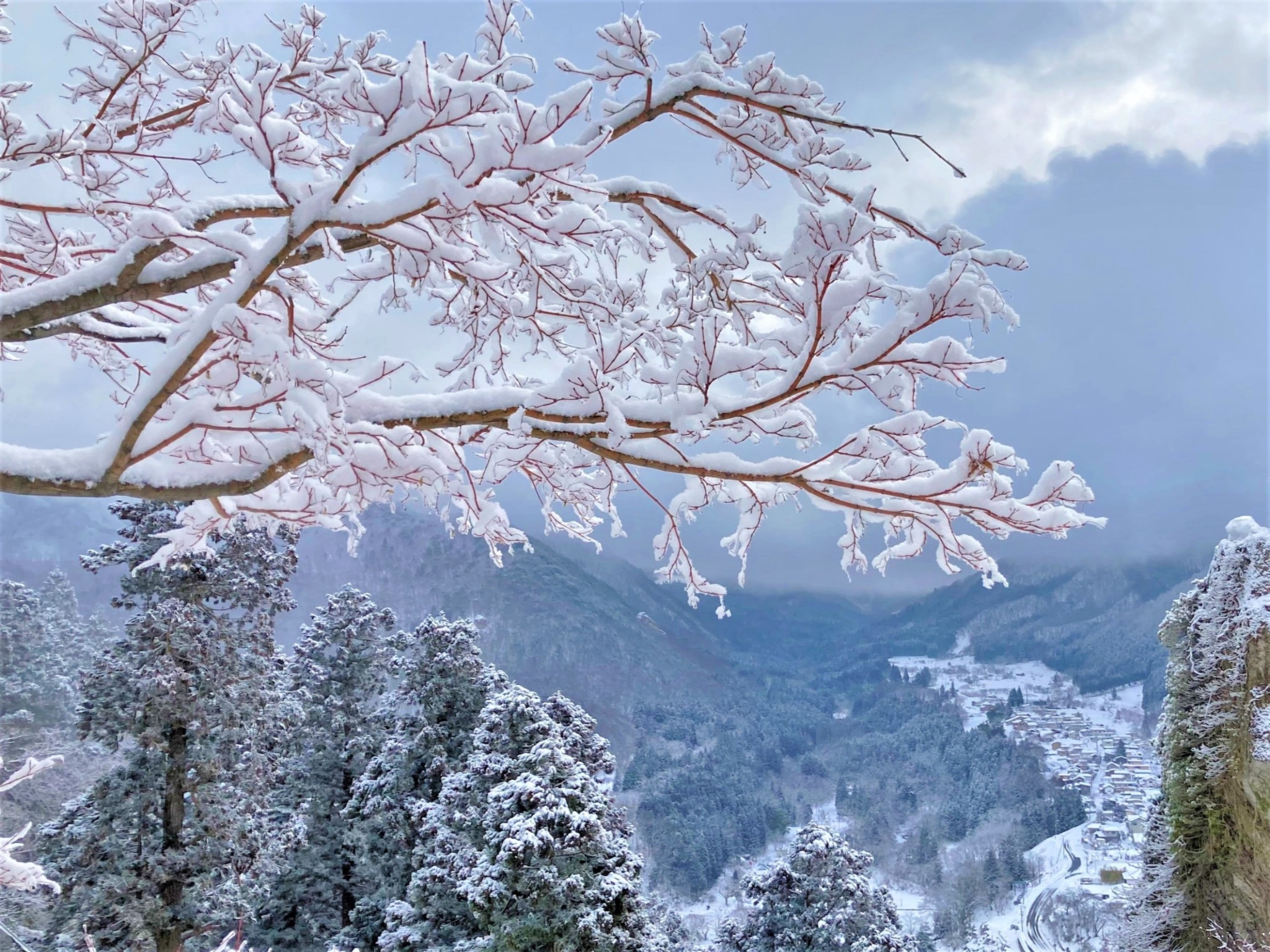
Yamagata is situated in the north of Japan’s largest island of Honshu. It can be reached from Tokyo by a scenic journey on the Shinkansen (bullet train), which takes a little under three hours, or by an even shorter flight. The prefecture is bordered by mountains with fantastic opportunities for skiing and hiking. Like many rural areas in Japan, it offers a natural respite from the crowding of the country’s overdeveloped cities and their hectic lifestyles. Although Yamagata provides many options for adventure, two places in particular stand out: one is an ancient temple complex and the other is a volcano, which in winter is populated—believe it or not—by monsters. It was to seek out these strange entities that I journeyed.
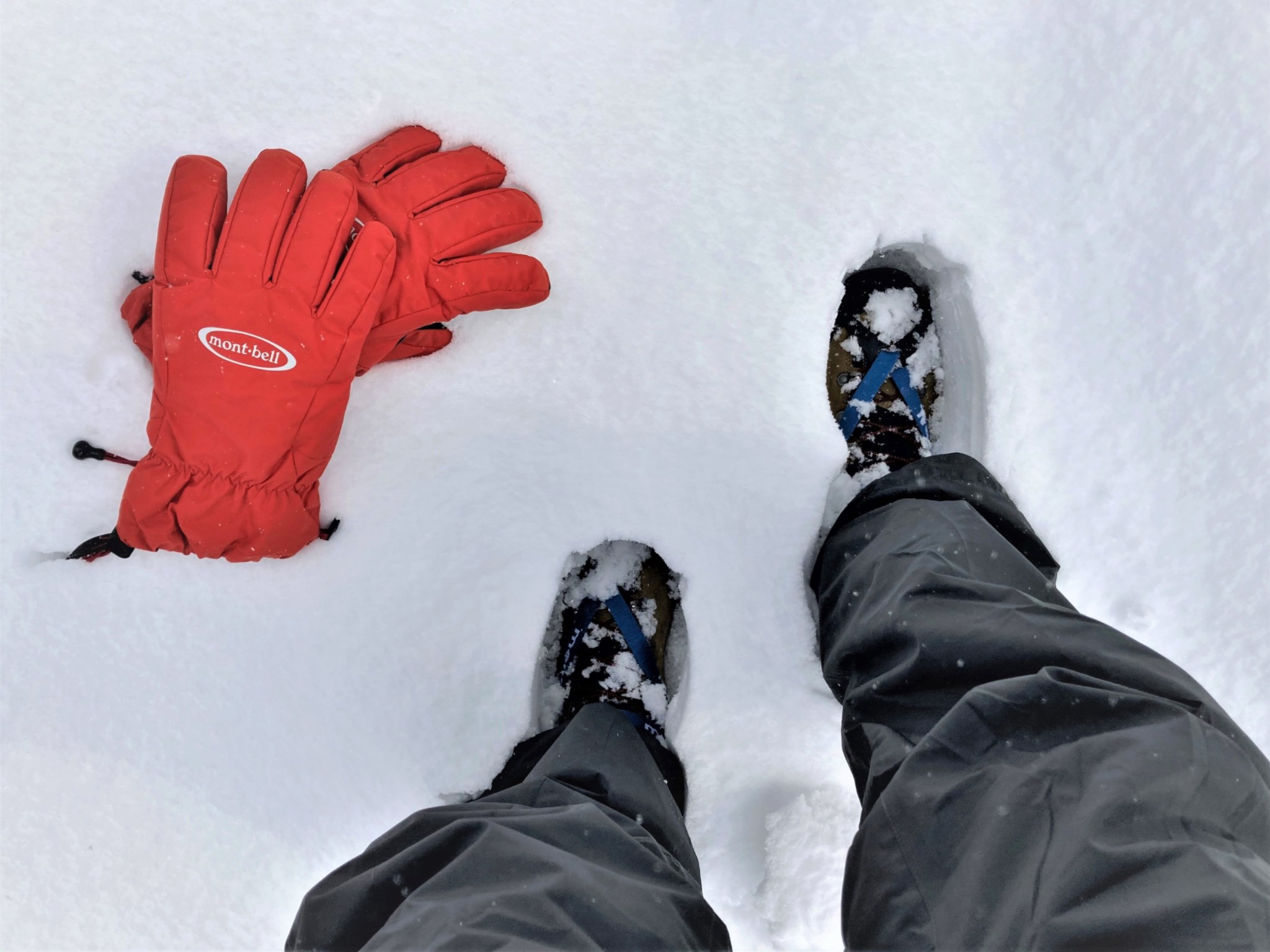
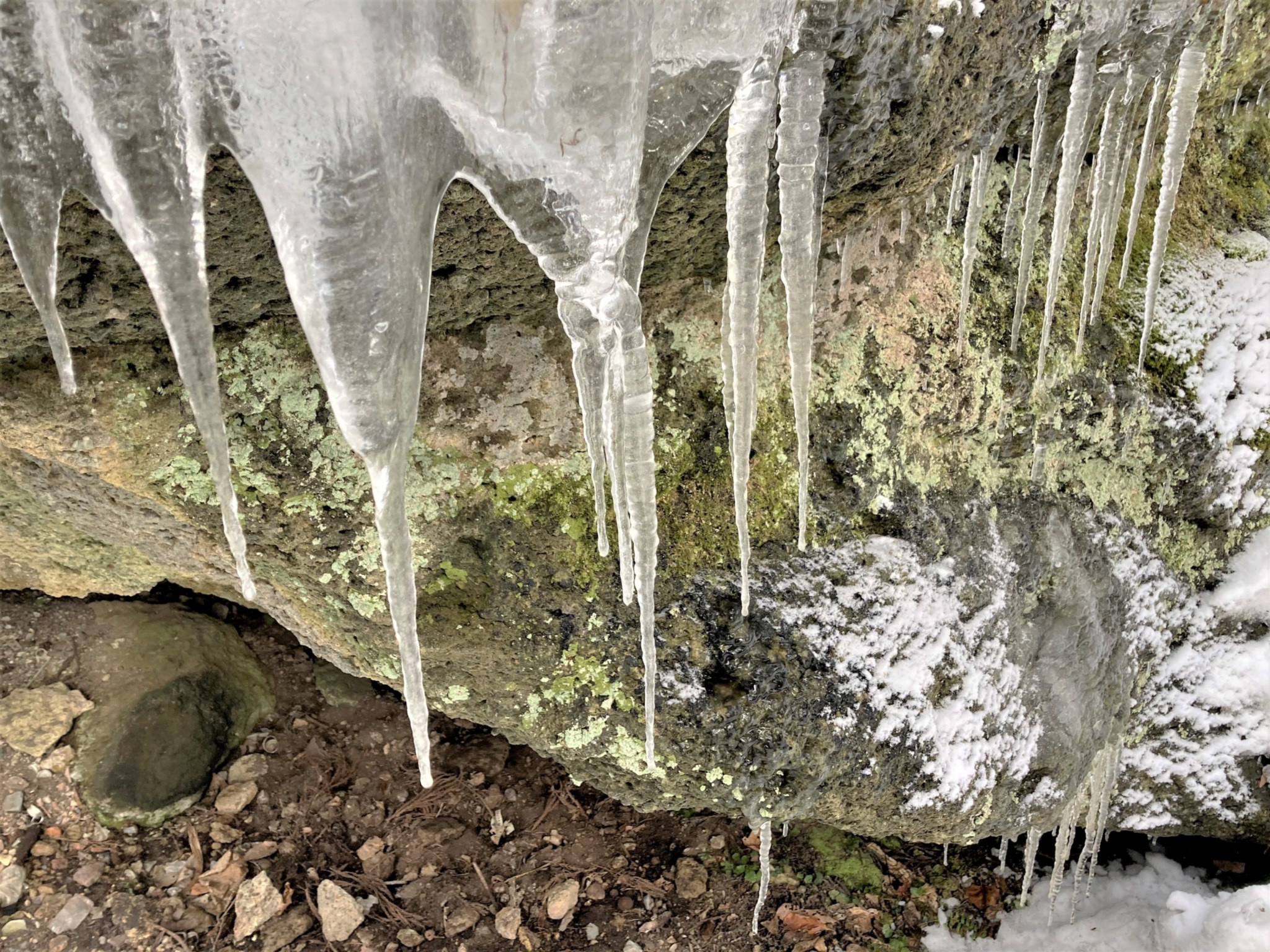
After taking a local train from Yamagata Station, I disembarked at Yamadera—a small town nestled in a valley at the base of frosty foothills. In English, Yamadera means mountain temple. The name of the settlement is accurate because perched precariously on the slopes of a nearby peak is a Buddhist temple complex with the official title of Risshaku-ji, a holy sanctuary that is over a thousand years old. It was a bitterly cold February day at the mercy of the season’s heavy snowfall; poor visibility meant I would have to walk to the summit to see Risshaku-ji’s treasures for myself. The narrow streets of the town were frozen solid with ice, and any attempt at ascending the mountain paths required the right gear, so I strapped on my crampons in a small field of ankle-deep powder snow and took a few seconds to orient myself before hitting the trail.
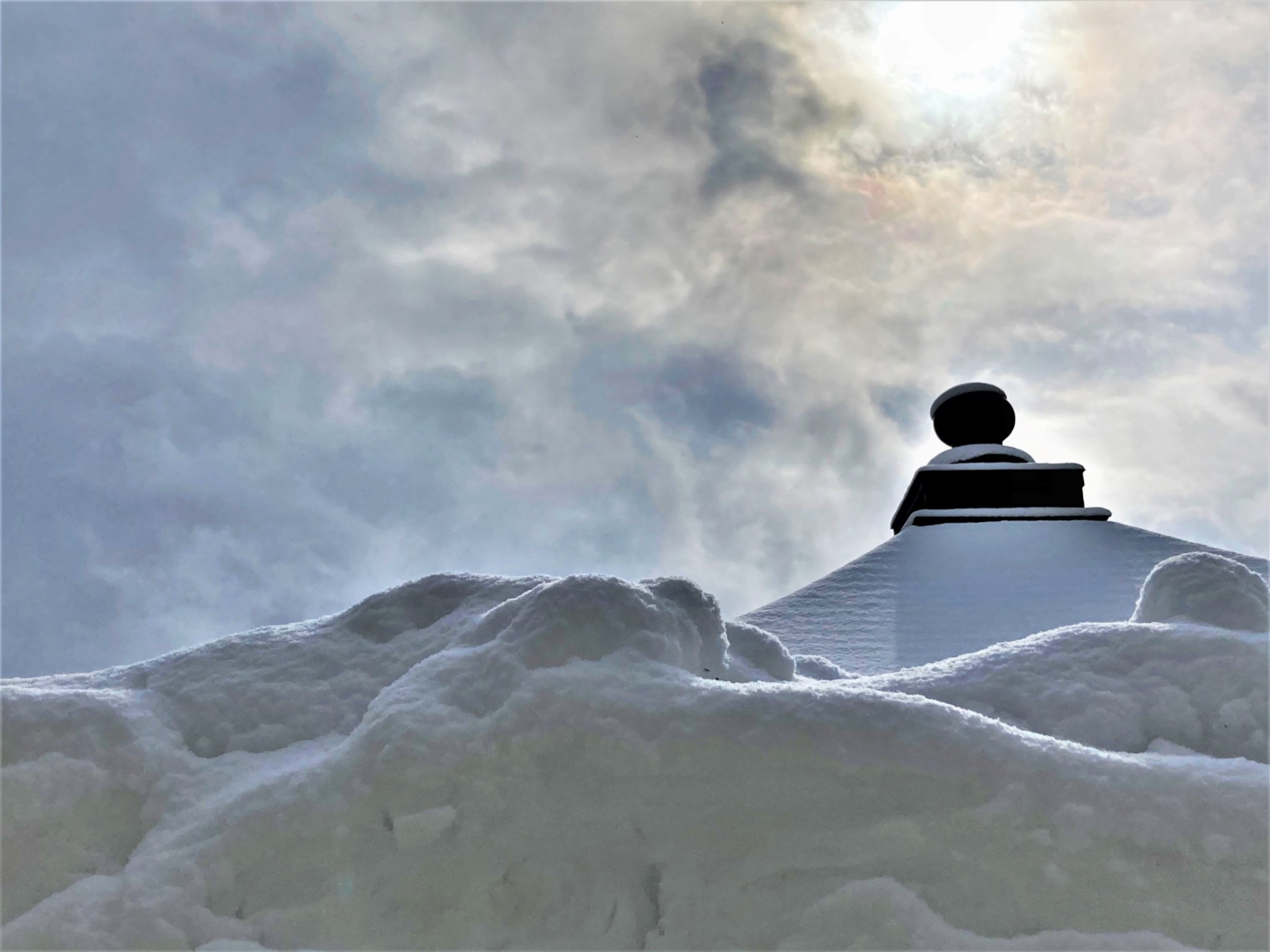
Apart from the slippery seasonal ice, the terrain presents little danger, as the paths are well trodden and have steps. Although I wasn’t interested in the monotonous task of counting them all, it’s said that there are over a thousand that lead up to the highest reaches of the mountain. The climb is not difficult but requires moderate fitness. Fortunately, the sights along the way serve as good excuses to take frequent breaks. As I rose higher, the temperature fell, and the sun fought a desperate (and mostly unsuccessful) battle with the clouds to reveal itself. When it was occasionally able to burst through the winter vapour to crown the roof of a shrine or temple, the effect was ethereal.
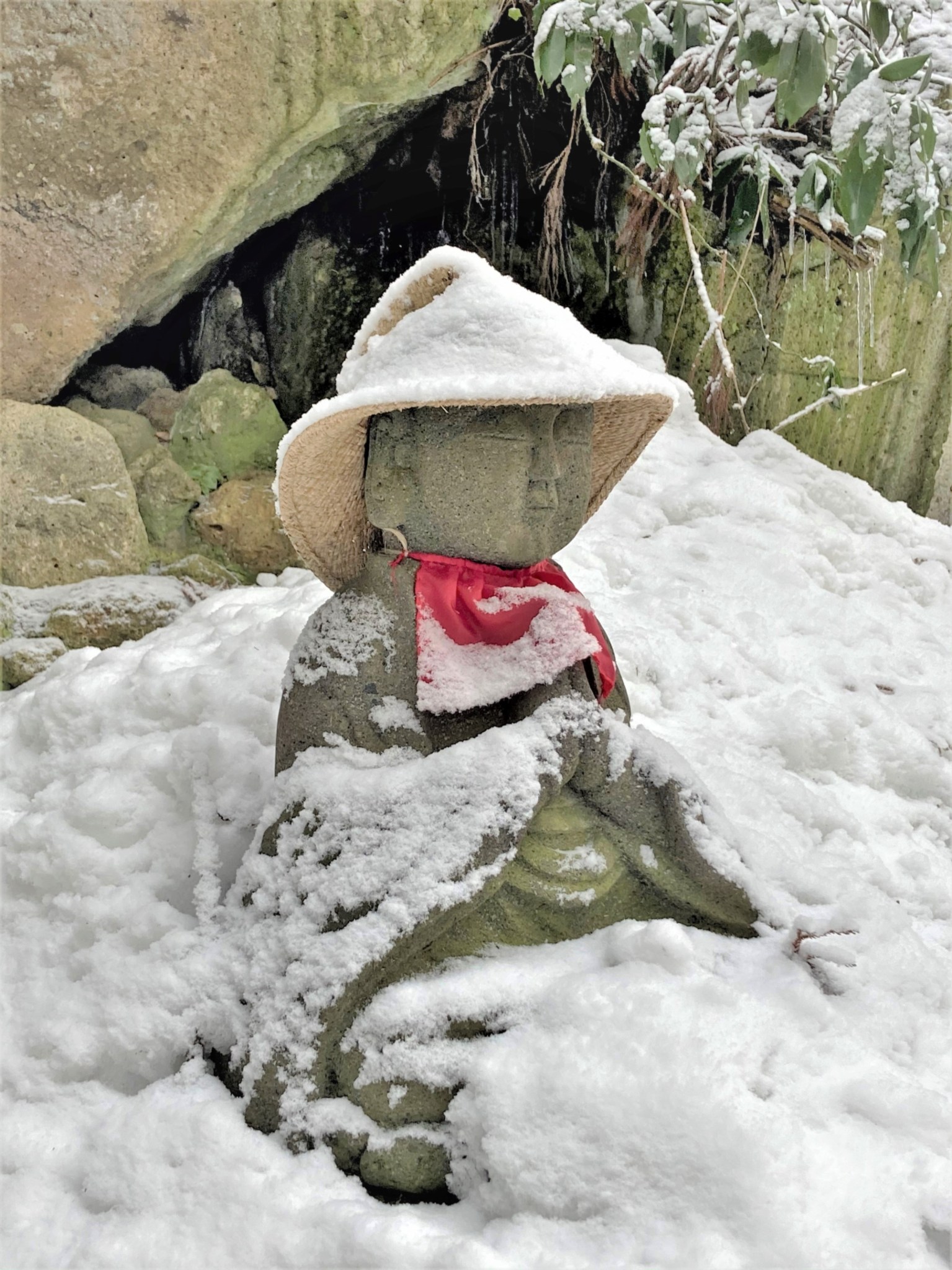
The mountain slopes on which Risshaku-ji rests are interspersed with time-worn wooden architecture; they also host some wonderful statues. Some seemed to be patiently awaiting my arrival after another lonely section of climbing, where the only sound I could hear was the regular crunch of my crampons puncturing the ice-cascaded steps. At one point, I raised my eyes to be met by the benevolent countenance of a stone Jizo statue deep in prayer, apparently unperturbed by the ever-deepening snow that threatened to bury him and eclipse his bright red bib until spring. Such representations of Jizo Bodhisattva are quite common at sites of religious significance throughout the country. In Japanese Buddhist belief, he serves as the protector of travellers and children, making him a popular and well-loved deity.
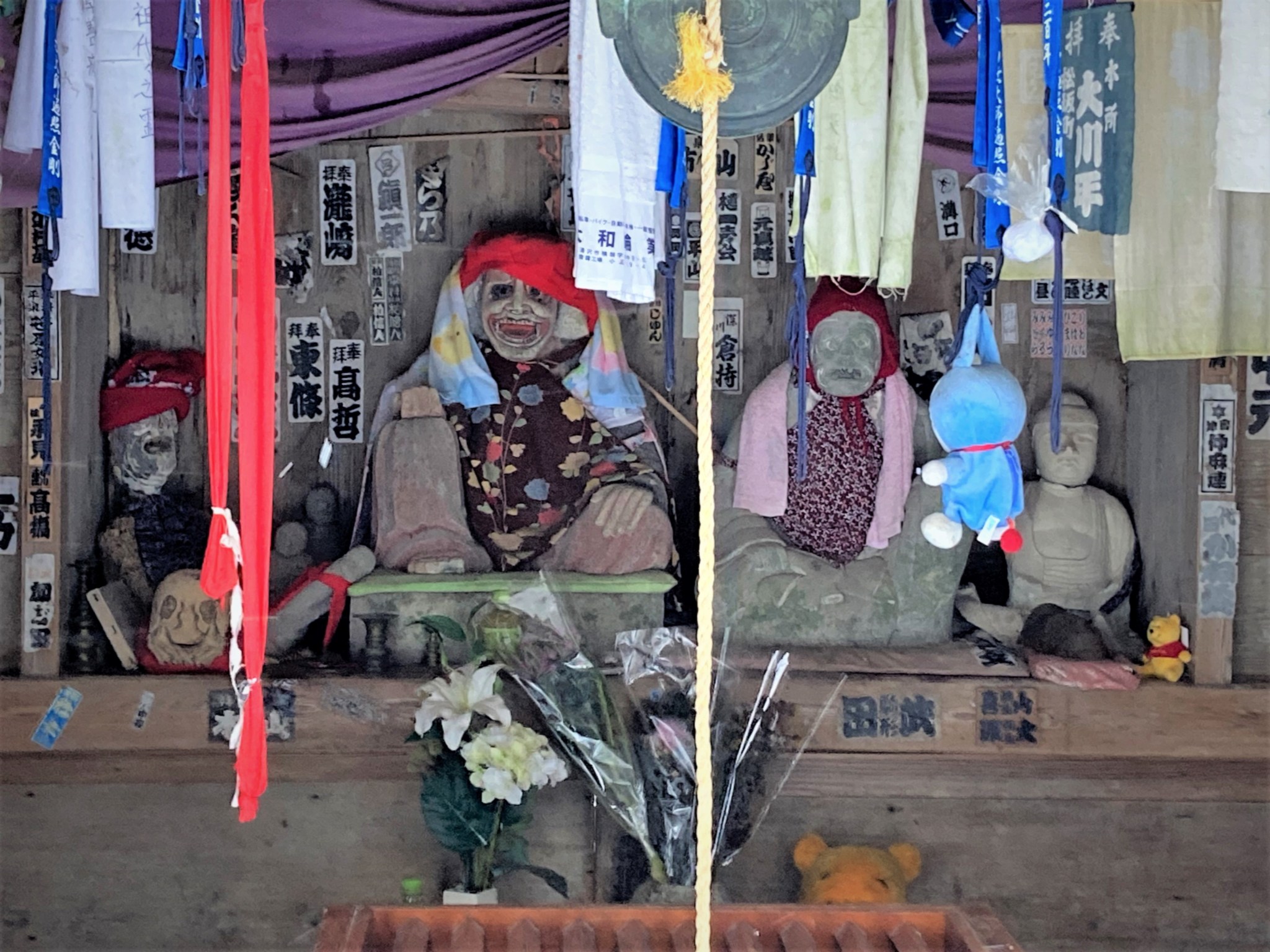
Not all the statuary I came across projected the same aura of serenity. Set back from the main trail, a small shrine housed a curious collection of unsettling items, such as old hanging towels, half-dead flowers and dismembered stone heads. Offerings and prayers are made here before an assortment of creepy semi-clothed characters with frightening expressions who share space with more conventional Buddhist art and a menagerie of cuddly toys. The strange display brought my attention back to the overall objective of my quest to Yamagata, and as I left my stone acquaintances behind and continued along the path that wove its way through timeless rock and ice, I began to focus on my real quarry.
I knew that somewhere deep within the distant mountain ranges, hidden behind a thick veil of steel cloud, sat a group of volcanoes known collectively as Mount Zao. Despite its current quiet slumber, Zao is one of the most historically active volcanoes in northern Japan. As barren and devoid of life as one might assume the higher reaches of an active volcano to be, it is often frequented by winter sports enthusiasts. Zao is also the rumoured abode of an army of giant creatures named jyuhyo that only emerge during the year’s coldest season. I had heard that these anomalies come in many shapes and sizes and can reach a height of several metres. I assumed I might have a good chance of encountering at least one, should I make the effort to go and search.
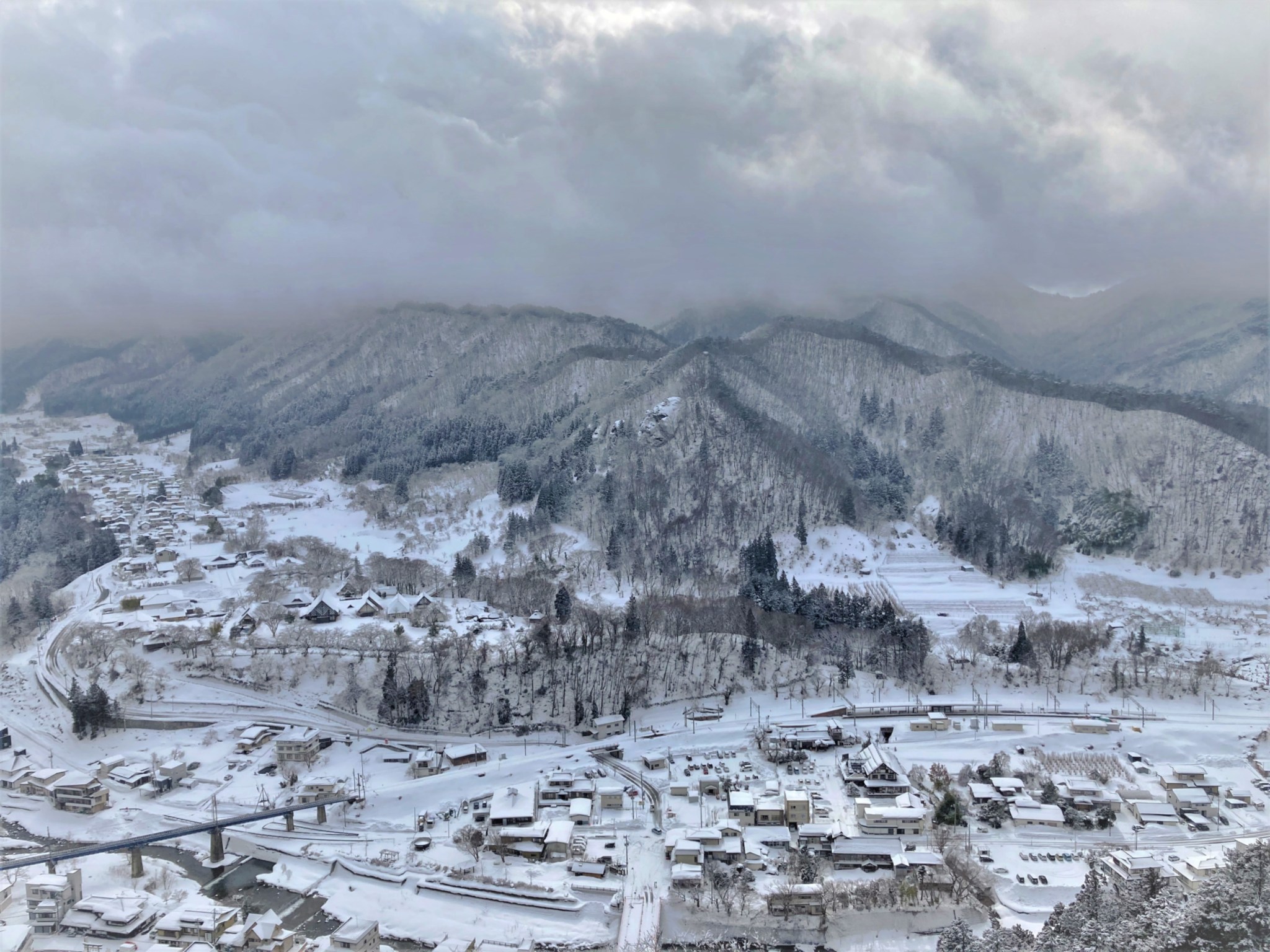
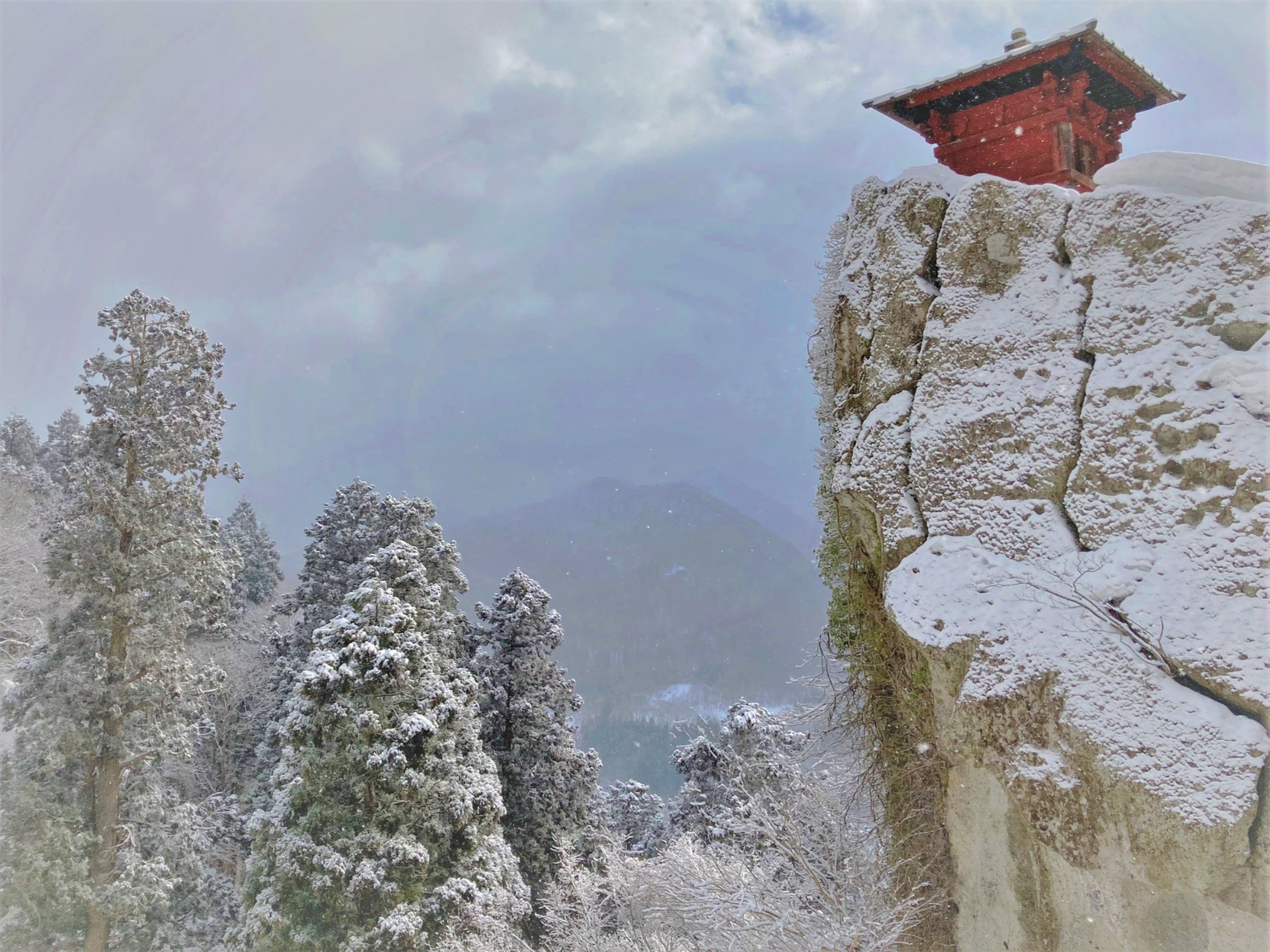
I planned to dedicate the following day to the task, but my musings on what tomorrow’s adventure might reveal were brought to an abrupt end by the realisation that the weather had taken a turn for the worse. What had been a relatively clear line of sight to the mountains beyond Yamadera was replaced by a grey-white miasma that seemed like a foreboding preview of what Zao could dish out. The huge bank of new clouds that had crept up over the skeletal spine of the opposite mountain range had swept in, enveloping the town. Pulling up my hood and doubling my pace, I marched on. As fresh snowfall built up on the branches and leaves of the evergreens, I arrived at the top of Risshaku-ji’s most famous viewing point—the sutra repository. It sat clinging to the edge of a vertiginous cliff face cracked and dusted with frost, its splendid vermillion timbers standing out against the icy elements.
The next day, I set out early by bus and arrived at Zao Onsen after an hour. The village that serves as the base for local outdoor activities appeared deserted apart from an attendant standing by a ropeway ready for its first dawn run. I clambered inside with my snowshoes and ski poles, and the ungainly contraption headed up into the clouds. The twenty minutes it took to get to the 1,660-metre summit station was surreal; thick fog swallowed the morning light, causing everything to become suffused with a disorienting amber glow. With nothing discernible outside the carriage, only the sensation in my stomach told me I was still ascending. When a sudden jolt informed me of my arrival, I slid open the door and stepped out onto a platform frozen in time.
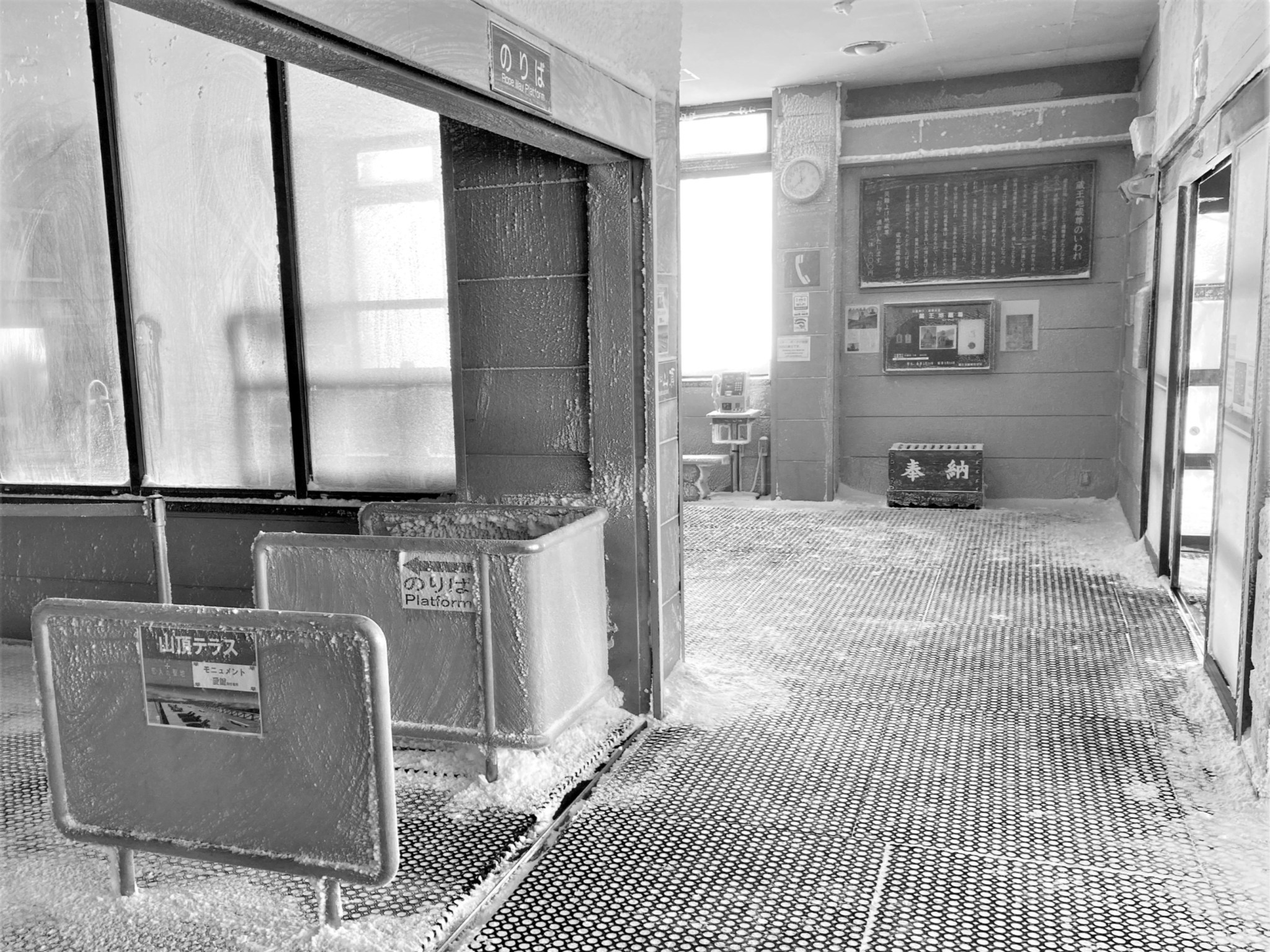
Looking like a location from a Hollywood disaster movie, every surface was coated with hard rime ice that had been blown in through the narrow doorway and swirled around by powerful gusts. This was my introduction to the rare and isolated naturally occurring phenomenon that shapes the surrounding landscape. The high-velocity winds of the Siberian jet stream pick up ice-cold droplets of water and deposit them on everything they can reach. The subsequent rapid freezing process produces some environments that have an almost apocalyptic atmosphere. With the temperature at minus 16°C, I was only able to remove my gloves for a minute to take a photo before my hands felt painful. As the snow outside was several metres deep in places, it was unsuitable for crampons, so I attached my snowshoes instead, covered any exposed skin and ventured outside.
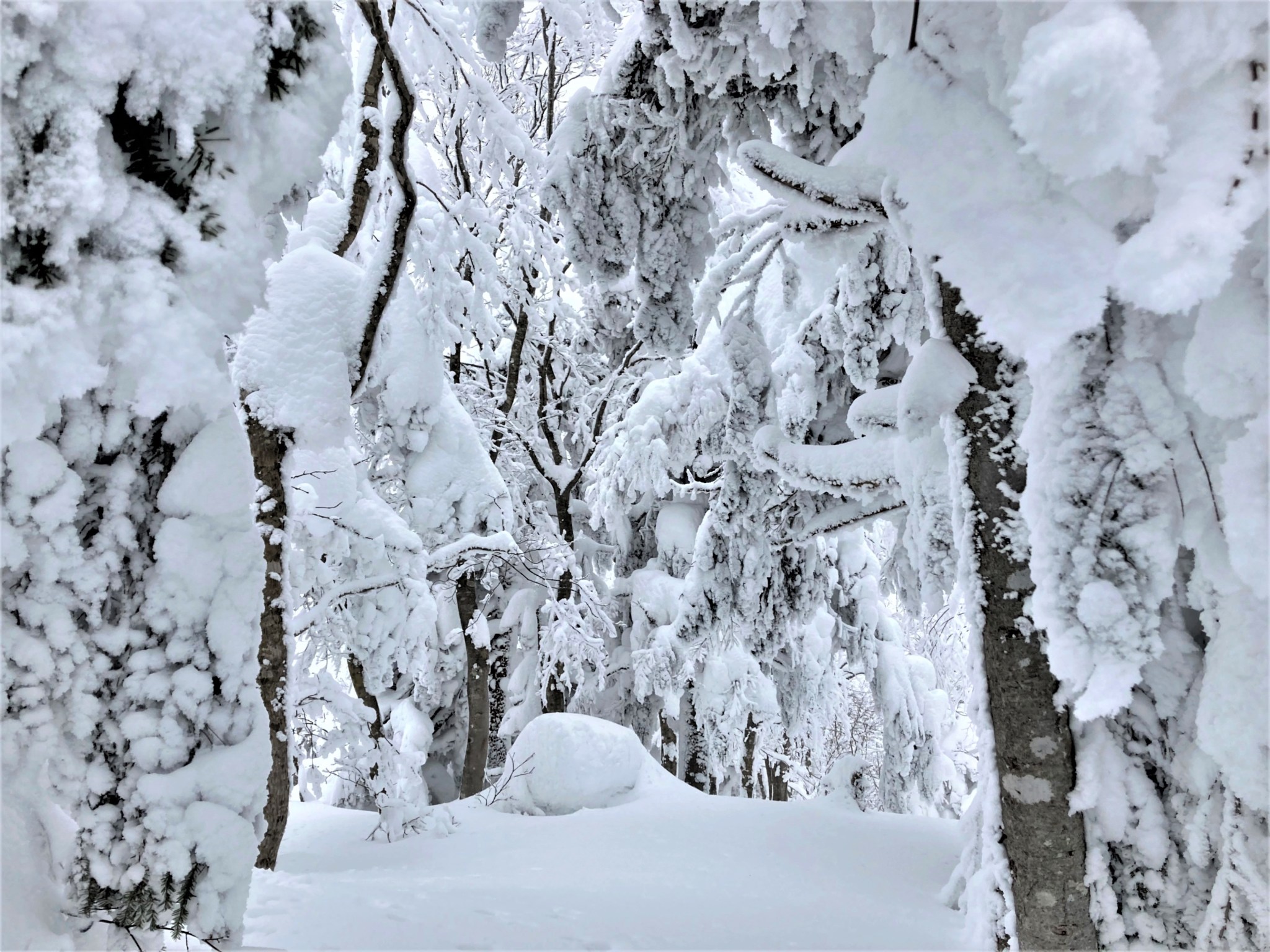
Though still overcast, the wind had dropped and visibility had improved. Not knowing when the storm would resume, I trudged to the edge of the forest as quickly as the terrain would allow and entered through a small break in the treeline. There, I came across further evidence of the rime ice’s handiwork and slid into a hollow beneath the lowest limbs of a large tree to assess its formation at close quarters. The miniature needles it creates on the branches act as foundations on which the snowfall builds clusters of shapes that look like the growths of some uncontrollable white parasite. As I continued into the breach, the air started to feel heavy. I surmised the snow monsters must be near. Time turned into an abstract concept as I explored the never-ending sea of wood and snow without a trace of success, and I started to fear my efforts would be in vain. The wind was gaining strength again and snow had begun to fall, but just as I was about to give up, I heard it—an eerie intermittent creaking, and as I reached the next clearing, there it was.
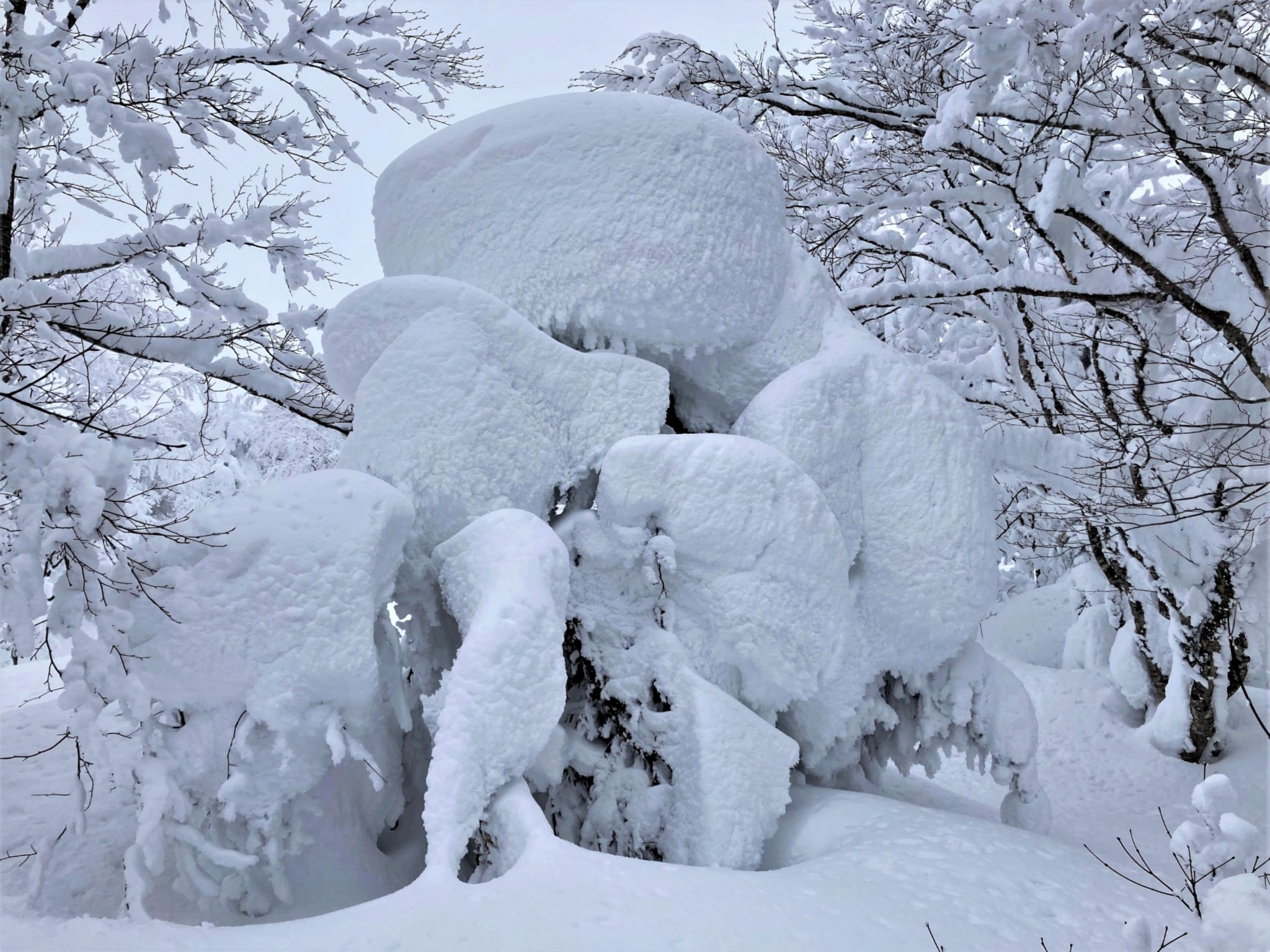
The grotesque crab-like creature stood silently beneath the overhanging tendrils of timber and ice. It appeared to have ceased movement to size up the intruder that dared to violate its sanctum. As it observed me, the lower parts of its bulky amorphous appendages began to sway and twitch in tempo with the terrible howl of the rising wind. Here it was—a fully formed jyuhyo before my very eyes—a monster created and sculpted by fierce winter gales. I was captivated by its uniqueness. Its powerful head seemed to consist of a gigantic single block of rime ice that must have taken weeks to reach such proportions. I don’t know how long I stood there in that chilling standoff, but it was clear that the icy crustacean wasn’t going to retreat. So, taking tentative steps backwards, I withdrew while the storm rolled in with threatening intent. Having finally put enough distance between myself and the snow crab, I turned around, only to smash into the leg of another behemoth.
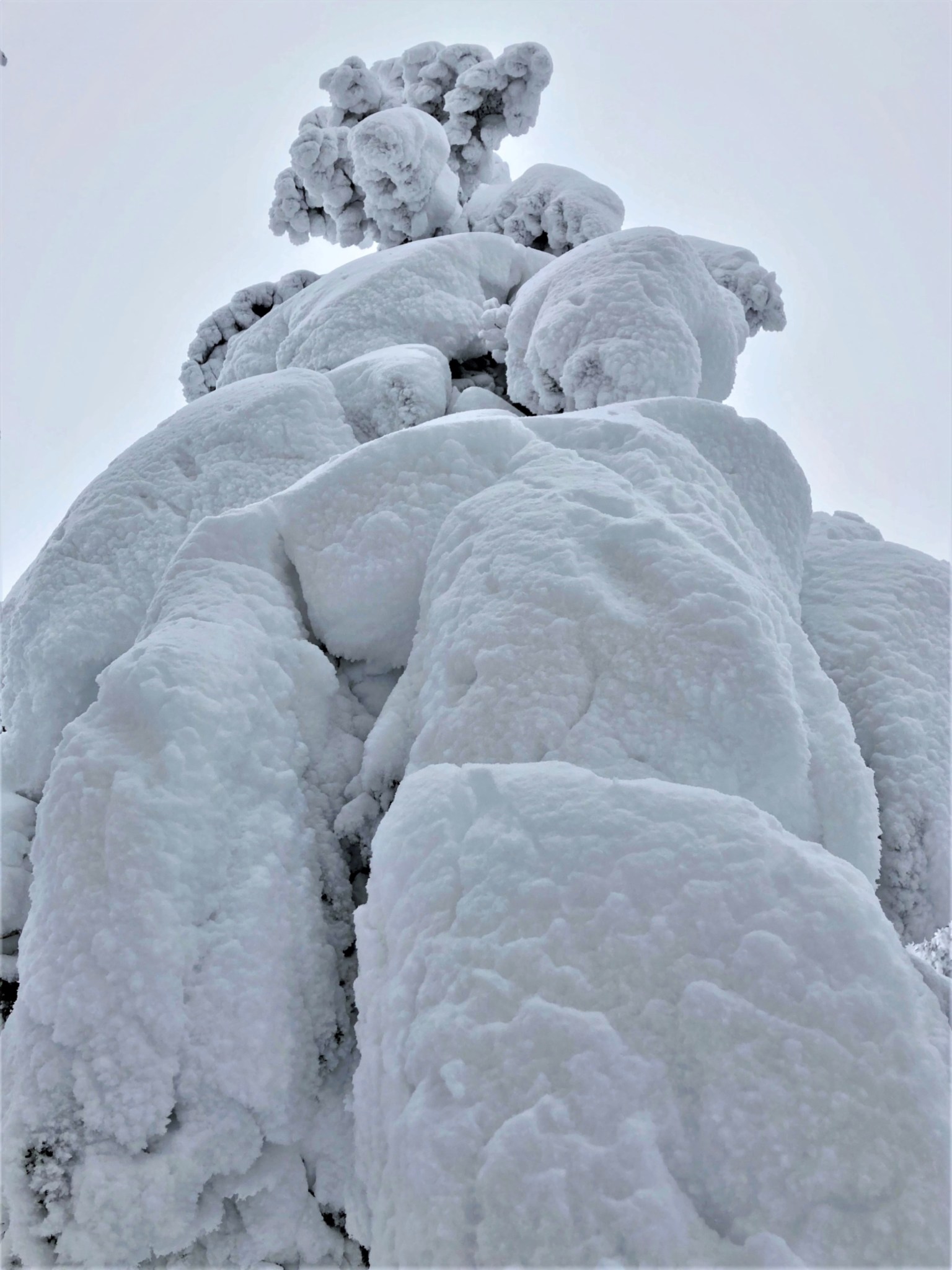
The four-metre ogre of ice gazed down at me, its bent head adorned by some sort of nebulous diamond headdress. The circumference of just one of its legs was greater than that of my body, and I wondered whether I was about to be stomped out, a victim of my own adventurous curiosity. But there it remained—animation suspended—its intimidating stare boring straight through me and into the earth itself. With the incessant buffeting of the newly born blizzard and my imagination in overdrive, I took flight into the opaque white abyss. The main body of the storm drove in with renewed vigour, and I was caught up in a mélange of flying ice particles and splintered twigs. Quickly approaching whiteout conditions, I frantically scanned what little I could see of the area for a place to take shelter. Finding a narrow gap between two walls of ice, I climbed in—just as visibility dropped to zero. Cold and disoriented, I hunkered down, waiting for the blizzard to peter out. When the worst of it had passed, I emerged from my hideaway and glanced back in appreciation towards the agents of my salvation. To my horror, I realised I had taken refuge between two more icy giants locked in monstrous combat.
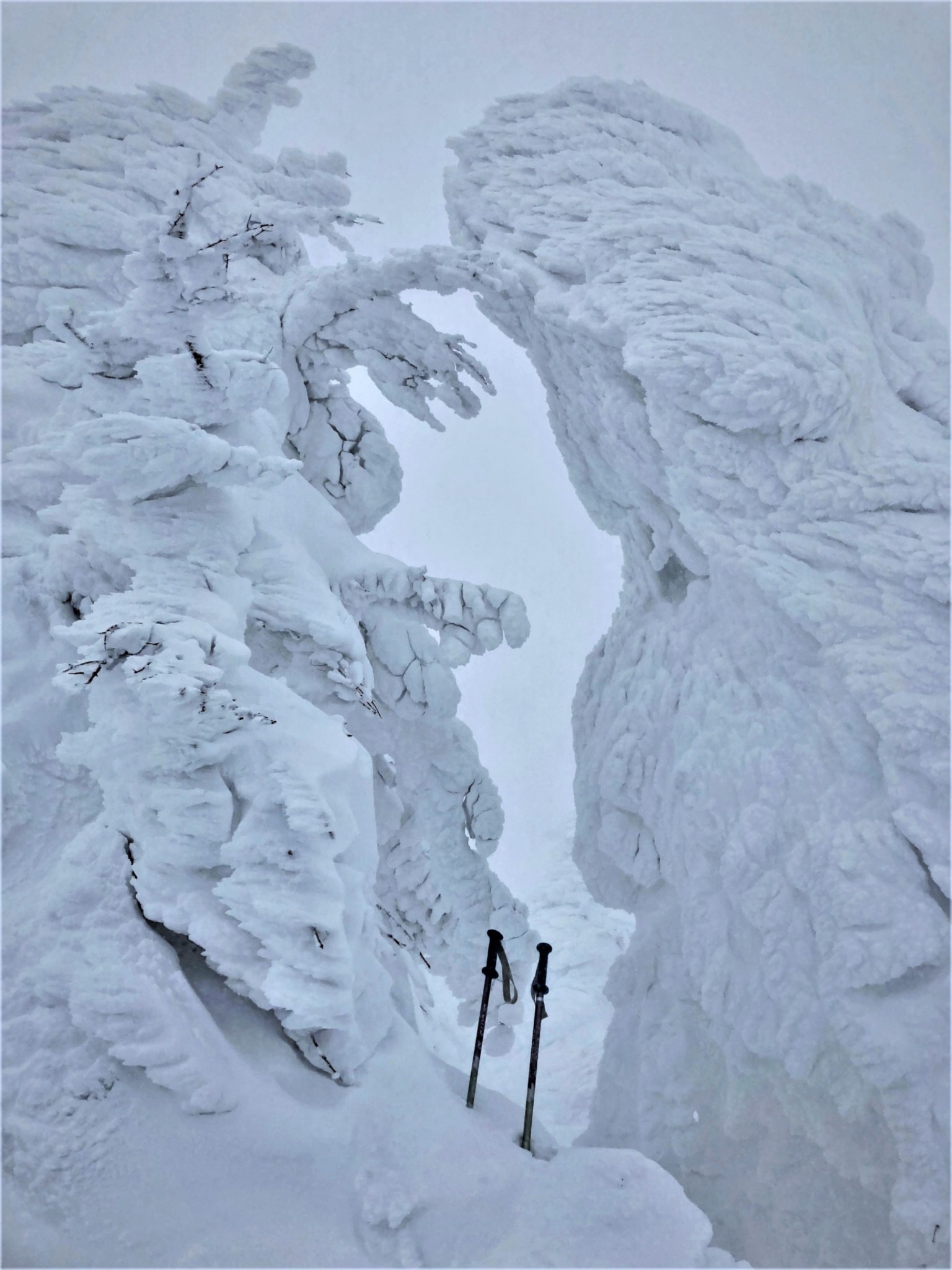
They were squaring off against each other, so close they would soon become a single inseparable mass. I was fortunate not to have been crushed between their hulking torsos. I hurried downhill, leaving my ski poles behind at the mercy of the ice creatures’ violent rage. The skies had started to clear up, but the storm had caused the wind chill factor to drop to minus 25°C. My toes and fingers were beginning to feel numb; I desperately needed to get down to the lower ropeway station. Using my compass to navigate, I half walked, half slid through the misty forest, unsure of when the next abomination would lurch out of the shadows. As I continued my descent, the air gradually lost its sinister tangibility, and several hundred metres further down the slopes, I finally staggered out from the treeline. Thankful to be no worse for wear, I peered over my shoulder at two twin sentinels—unmoving but in a state of partial transformation from simple trees to hideous nightmares. They seemed to offer an unspoken warning. . . . Abandon hope all ye who enter; here be monsters!
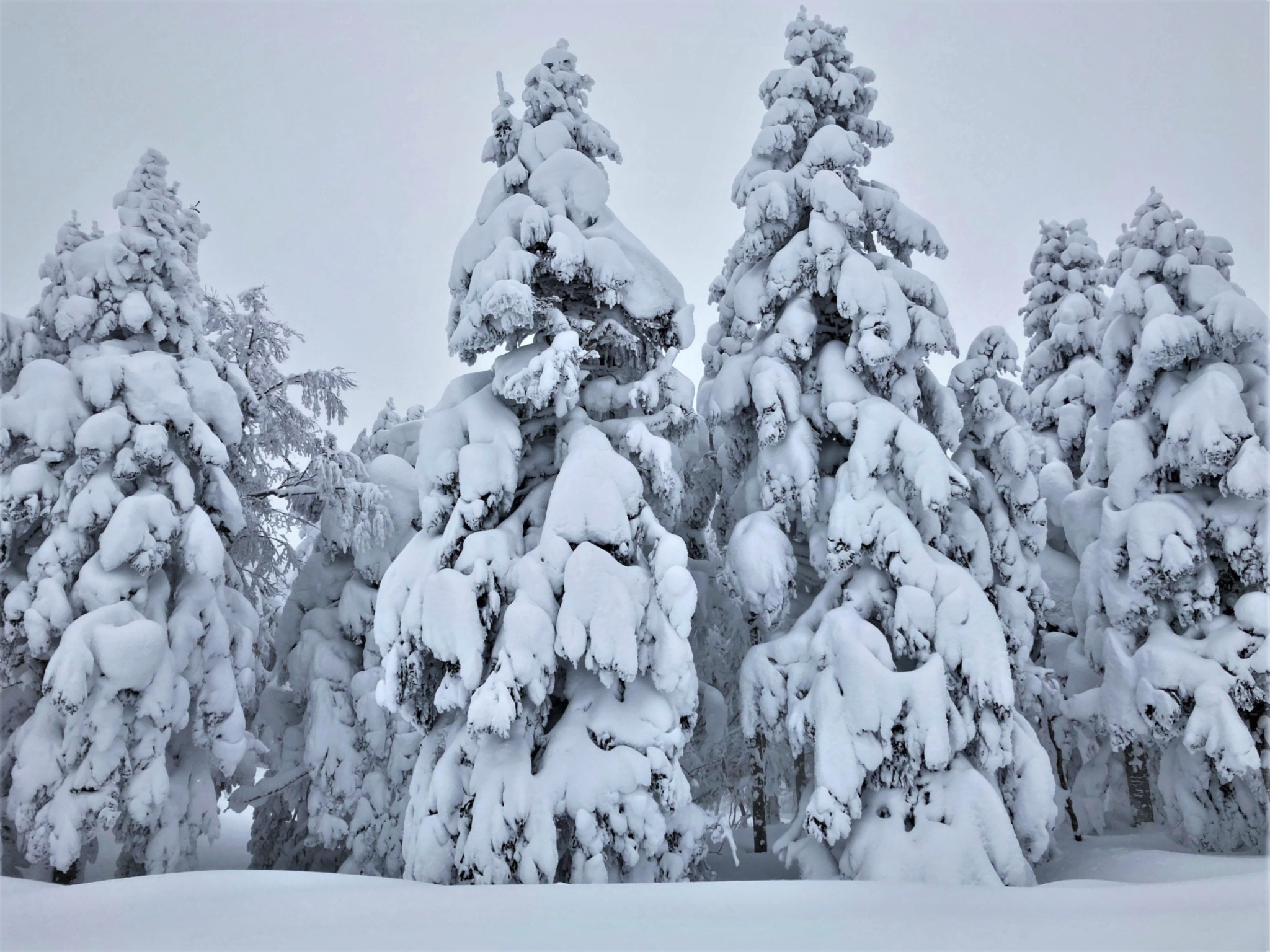
Several hours later, I was back in the city, having thoroughly defrosted and resupplied my body with hot food and drink. As I sat flicking through my photographs in my toasty hotel room, I wondered whether anyone would believe my story, for in spring, the jyuhyo of Zao melt away into the nothingness from which they came. To those who would like to confirm the veracity of my experience, rest assured that there will be another chance, as the creatures are certain to rise up again next winter and will be waiting somewhere in the icy volcanic mountain ranges. If you do have the courage to seek them out yourself, I have a small favour to ask—should you happen to stumble upon a lonely pair of battered and bruised ski poles that were left to an unknown fate, please drop me a line on my contact page so I can ensure a safe return to their rightful owner. Thank you!

A Note on the Images:
The photographs featured in this piece were all taken by Philip S. Kay.
 Escape & Adventure