
I’ve been fascinated by ancient history and stories of adventure that involve travel to distant or exotic places for as long as I can remember. Even though it was made well before I was born, I think my interest began with Ray Harryhausen’s Dynamation film Jason and the Argonauts and was consolidated by the first three Indiana Jones movies. After that, I recall an obsession with Willard Price’s Adventure novels—a series aimed at children that concerns the escapades of two brothers who travel the world collecting animals. As I got a bit older, I started immersing myself in video games such as Tomb Raider, which contains similar themes to the films I loved so much.
While I’m sure all of the above influenced my decision to study ancient history and archaeology and contributed to my desire to travel and live overseas, it was the stories I read that were the most important. I have listed ten of my favourites below, including a paragraph about each. Although some are quite different from others in terms of age, content and tone, they all recount great travel adventures, and several have a historical, archaeological or cultural focus. I’ve ordered them chronologically to make it easier to appreciate the era they come from. I feel that this is particularly important in the case of the ‘lost world’ genre stories, which were written during the height of European imperialism and can contain racist and sexist stereotypes that are morally and socially incorrect. They are still good adventure yarns, but parts of them may be uncomfortable to read.
The Odyssey (8th century)
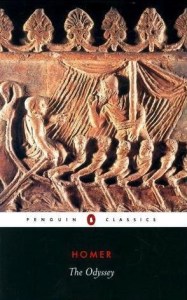
Generally considered to have been composed sometime in the eighth century B.C.E., Homer’s epic is one of the greatest works of Western literature and a true adventure story. Set after his participation in the Trojan War, it details the trials and tribulations of wily Odysseus’ ten-year journey to return to his beloved wife and son in Ithaca, who are under threat from some despicable suitors. It is a story of adversity, temptation, perseverance, righteousness and revenge that takes the hero on a wild island-hopping tour of the Mediterranean. Odysseus’ voyage includes encounters with legendary heroes of the fall of Troy, ancient Greek mythological creatures and even the gods themselves. The Odyssey is not only an adventure story with an ancient historical setting; it is a work of ancient history itself. Despite that, it has been translated, condensed and simplified to make it more accessible to modern readers and can be found in almost any bookstore. If you want to trace the roots of escapism through adventure stories back to their literary prototypes, there is no better place to start.
The Seven Voyages of Sinbad the Sailor (17th century)

The ‘Voyages of Sinbad the Sailor’, together with ‘Sinbad the Sailor and Sinbad the Porter’, make up a frame story cycle featured in The Thousand and One Nights, a collection of Arabian, Persian and Indian folk tales. The Sinbad tales probably formed an independent work originally but were found to be included as part of The Thousand and One Nights in the late 1600s. Set in the eighth or ninth century C.E., each short story refers to one of Sinbad’s miraculous seven voyages. They tend to follow the same pattern and begin with the restless mariner, filled with wanderlust and a longing for world travel, setting sail from Basra. He inevitably ends up shipwrecked somewhere, and it is from that point that the contents of the tales really diverge. Collectively, they feature exotic islands with strange customs and a wide range of dangers, such as gigantic animals and other supernatural creatures. Whether through cunning or good fortune, the hero always finds his way home to Baghdad—usually having amassed a great wealth of riches in treasure. The tales parallel The Odyssey in some ways, and it’s possible that Homer’s epic had a degree of influence on the later stories.
King Solomon’s Mines (1885)
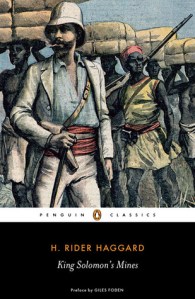
Written in 1885, Sir H. Rider Haggard’s novel is commonly accredited with being the first entry of the ‘lost world’ genre of literature. It tells the story of four men (Umbopa, Allan Quartermain, Sir Henry Curtis and Captain John Good) who embark on an expedition to find out the fate of Sir Henry’s brother, who was last known to be venturing into a remote part of Africa to search for the mines of biblical King Solomon. Their quest takes them across a dangerous desert and over a mysterious mountain range to the hidden country of Kukuanaland. During their journey, the protagonists face various challenges, which include hazardous privations, a duel with an elephant, an encounter with a menacing king and his wicked sorceress and a full-scale battle between two armies. It’s an exciting story containing death-defying scrapes, memorable characters, great humour and an unexpected twist. In the wake of its success, a lot of other contemporary authors wrote novels that are similar to King Solomon’s Mines in plot and style, but very few of them turned out to be as entertaining.
Heart of Darkness (1899)

Joseph Conrad’s turn-of-the-century novella has received more literary analysis than most other works of fiction. It presents the story of Charles Marlow as he recounts a journey to the Congo Free State to navigate a river that runs through the African interior. Heart of Darkness is more of an introspective psychological horror story than a classic adventure, and through it, Conrad explores the human mental condition as much as the centre of the continent. The focal point of Marlow’s tale is a man stationed at a distant trading post named Kurtz, who, despite the respected and accomplished reputation he appears to have once possessed, has descended into madness and savagery. As we track Marlow’s arduous and unsettling journey into the unknown, he assaults us with examples of the frustrations of travel and the rigours of existence there. He comes face-to-face with local aggression, the barbarity of the colonising Europeans, shocking disease and death. While not a light read, it’s a thought-provoking piece of literature that forces one to consider the depravity that can emerge under certain conditions.
The Lost World (1912)

Sir Arthur Conan Doyle’s The Lost World describes an expedition to the Amazon basin to verify the outrageous claim of the existence of a remote jungle plateau still inhabited by dinosaurs. The story features some great personalities, such as the tempestuous Professor Challenger and the heroic Lord John Roxton, as it chronicles the obstacles they face along the way to confirming the unlikely assertion. After locating and surmounting the almost unreachable plateau, the explorers struggle to survive while crossing paths with prehistoric carnivores, including pterodactyls. They also become embroiled in a conflict between two groups of indigenous hominids that inhabit the strange land. The novel may have been inspired by the South American expeditions of real-life explorer Percy Harrison Fawcett (of The Lost City of Z fame), who was an acquaintance of Sir Arthur Conan Doyle. In spite of its title, The Lost World wasn’t one of the first works of fiction to belong to the literary genre of the same name. It is, however, one of its finest and most influential examples.
Lost Horizon (1933)
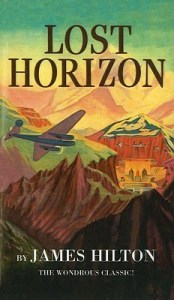
Lost Horizon, by James Hilton, is the novel that introduced the mystical land of Shangri-La. Possibly based on Shambhala or the beyuls of Tibetan Buddhist belief, Hilton’s fictional utopia is hidden somewhere in the Kunlun Mountains and is dominated by a giant peak called Karakal. Set in the early 1930s, the narrative concerns the hijacking of a plane that contains four passengers, including main protagonist Hugh ‘Glory’ Conway, and their arrival at Shangri-La. The idyllic valley sanctuary is populated by a society that does everything in moderation and ages so slowly that some of its members have lived for more than two centuries. Lost Horizon is a reflective and spiritual piece of writing. Throughout its pages, Hilton reveals Conway’s deep thoughts and his appreciation for a culture that attaches great importance to preserving generations of humanity’s achievements in the arts, music and literature. Shangri-La’s residents’ focus on a calm and contemplative lifestyle acts as a sharp contrast to the outside world’s rush to militarise and progress at any cost—a dichotomy that still feels relevant in today’s technology-obsessed age.
The Sheltering Sky (1949)
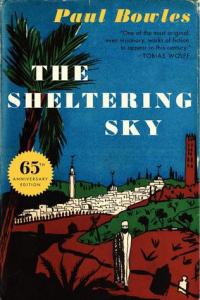
The Sheltering Sky is a hypnotic and disturbing account of the travels of three Americans in the post-war towns and deserts of North Africa. Paul Bowles presents the downward spiral of marriage, friendship, morals and health in a novel that serves as a troubling example of the negative consequences of taking several steps too far over the threshold of unfamiliarity in a foreign land. The descriptions of exotic travel, delivered through mesmerising prose, are anchored by the way Bowles reveals the nuances of his characters. The story is a frightening exposition of the gulf between the romantic desire for travel and its occasional harsh reality; it may act as a dissuasive tonic to anyone who experiences the siren-like call of an opaque temptation to venture away from their path of cultural security. Peering into the dark corners of serious illness, slow death, incarceration and mental breakdown, The Sheltering Sky forces the psyche to descend to a claustrophobic level of discomfort. Despite its bleakness and refusal to allow the protagonists or readers true freedom, it is a masterpiece of existentialist travel literature.
Inca Gold (1994)
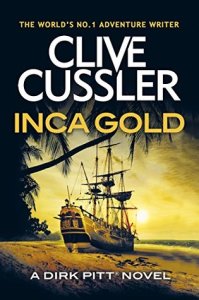
Although there are a few of Clive Cussler’s other novels, such as Atlantis Found, that would not be out of place on this list, it is Inca Gold that perhaps best illustrates the author’s ability to infuse a fast-paced adventure story with the mysterious history and allure of past civilisations. It features his recurring hero (the ever-capable Dirk Pitt), who gets caught up in the search for an Incan treasure hoard. As with most of Cussler’s books, Inca Gold starts with a historical prologue. This one involves a covert seaborne mission to hide an incredible amount of riches and is followed by an account of a large tsunami washing one of Francis Drake’s captured Spanish ships miles inland. A few centuries later, Pitt and his National Underwater and Marine Agency colleagues have to overcome adversity after adversity as they compete with a family-run criminal organisation to locate the ancient treasure. Inca Gold is not as deep or grounded as some of the other books on this page, but it provides an exciting and satisfying dose of escapism. It’s an entertaining and addictive page-turner that can be difficult to put down.
The Beach (1997)
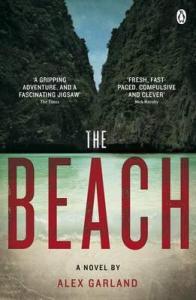
The Beach, by Alex Garland, hit bookstore shelves in 1997 in synchronisation with the growth of the backpacking phenomenon, which had been gaining popularity throughout the decade. It also fuelled its continued expansion. It was so popular among travellers that one was almost certain to find somebody engrossed in its riveting story of idealism and escape during any turn-of-the-millennium trip to Southeast Asia. Set in Thailand, the story centres on a young English backpacker named Richard and his acquisition of a map purporting to point the way to a secret island paradise, where a small community of like-minded souls live in harmonic bliss at an immaculate lagoon hideaway. It’s a gripping piece of literature that describes the journey to get to the island and the harrowing fall from grace of the utopia that exists there. Alex Garland’s love of travel and intimate knowledge of backpacker culture imbue the novel with a realism that older adventure books can’t rival. Despite being over two decades old, The Beach still feels modern enough to offer a believable and hard-hitting adventure for readers today.
Temple (1999)

It isn’t easy to find an author who writes faster-paced novels than Matthew Reilly. Reading one of his books generates the same level of excitement and anticipation one sometimes experiences watching a blockbuster Hollywood action film. Temple, published in 1999, is no exception. It’s composed of two connected stories that take place hundreds of years apart. The first focuses on the rebellious Spanish monk Alberto Santiago during the era of the conquistadors. The second concentrates on the adventures of expert linguist William Race and is set in the present. Both narratives revolve around an Incan idol: Santiago’s journey to protect it from his countrymen and Race’s efforts to keep it out of the hands of a host of villains with evil machinations. Even though Temple is another tale about ancient treasure, its breakneck speed and successive sequences of frenetic action make it stand out. The suspense-filled, edge-of-the-seat scenarios include confrontations with man-eating caimans, mythical jungle cats and a variety of deadly, highly trained military specialists. It is a thrilling read from cover to cover.

Disclaimer:
No ownership of copyright for the book cover images included on this page is claimed by Philip S. Kay. The book cover images have only been included on this page to aid this website’s readers in the identification and appreciation of the works of literature the images represent. The images have been used in accordance with what is believed to be fair dealing / fair use.
 Escape & Adventure